Law Enforcement/Corrections
Showing all 7 results
-
Overview
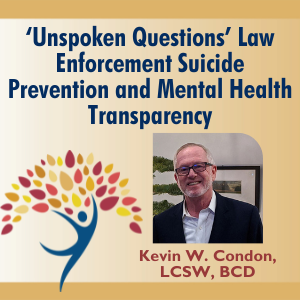
The International Association of Campus Law Enforcement Administrators (IACLEA) featured the above named article in the 2021 Winter edition of their Campus Law Enforcement Journal. The action plan described in the article is consistent with recommendations from the National Consortium on Law Enforcement Suicide: Final Report, published October 1, 2020. ‘Unspoken Questions’ refers to the reluctance to and/or avoidance of asking direct and specific questions, due to concerns of stigma and negative occupational impact, that can occur when a law enforcement employee experiences a personal mental health issue. Despite being generally aware of available mental health services, skeptical perceptions exist regarding accessing mental health care. For the agency, this skepticism contributes to the suspicion of intent and general distrust among employees. Consequently, the specific and direct questions may never get asked and remain ‘Unspoken Questions’. The worst case outcome is death by suicide or ‘loss of a whole life’. Another tragic result is that an employee may continue to experience the pain and despair of unresolved mental health issues, ‘the loss of a partial life’. This bold action plan challenges agency leadership to demonstrate organizational commitment by endorsing two separate transparent trainings that call for the integration of command staff and designated human resources representatives in the actual training in order to provide a forum for employees and give a voice to those ‘Unspoken Questions’.
Learning Objectives:
Upon completion, participants will be able to- Be instrumental in leading an agency-wide culture committed to promoting physical and mental health and wellness.
- Play a critical role in the agency’s transparent integrated approach to ensure that suicide prevention is prioritized and that norms and practices that support mental health and wellness are integrated into every aspect of policing.
- Be more capable to support efforts to reduce law enforcement deaths by suicide and eliminate the stigma associated with law enforcement personnel who experience mental health issues.
Presenter
-

Kevin W. Condon, LCSW, BCD
Owner
Law Enforcement Response to Mental Health, LLC
Kevin W. Condon, Licensed Clinical Social Worker (LCSW), Board Certified Diplomate (BCD). In June of 2002, Kevin retired from the Coral Gables (FL) Police Department (CGPD) as a lieutenant with over 25 years of service. He served as Commander of the Crisis Negotiation Team and SWAT Team. Kevin participated as a member of a CISM team for emergency responders serving Miami-Dade County. Kevin received the CGPD Life Saving Award for his interaction with a person with a mental illness.
Following his retirement, Kevin moved to Georgia and began a second career as a mental health professional. He held positions as a community Child and Adolescent therapist, Clinical Director of a State of GA residential program, and therapist at the University of Georgia. In March of 2018, after over six years with the Department of Veterans Affairs (VA), Kevin retired from the position of LCSW.
Kevin is certified by Georgia Peace Officer Standards and Training Council (P.O.S.T.) as a Lecturer on Law Enforcement and Mental Health. He is a certified instructor for Mental Health First Aid - Public Safety. Kevin has developed and presented training courses on issues of law enforcement and mental health.
Kevin has been recognized as a Subject Matter Expert (SME) on law enforcement and mental health by the Collaborative Reform Initiative-Technical Assistance Center. CRI-TAC is a partnership with the Department of Justice's (DOJ) Office of Community Oriented Policing which is implemented under the leadership of the International Association of Chiefs of Police (IACP).
In November of 2018, Kevin founded ‘Law Enforcement Response to Mental Health, LLC’. He provides training, consultation, and presentations related to law enforcement and mental health. During Kevin’s early years as a law enforcement officer, he experienced his own mental health issues. Kevin shares his personal journey in the interest of ‘paying it forward’.
-
Overview
Presentation Details:
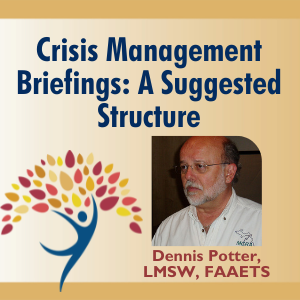
The Crisis Management Briefing is one of the most versatile interventions we have in our toolkit. Over the years, I have developed and refined a structure for providing this intervention so our team is providing it in a similar fashion. This seminar describes the structure and offers a video sample of the model. It might be helpful to organizing your own approach for this often under utilized tool
Learning Objectives:
Upon completion, participants will be able to:- Identify 3 reasons to utilize a structured CMB
- Identify the 3 steps in completing a CMB
- Identify 5 keyk teaching points in a CMB
Presenter
-

Dennis Potter, LMSW, FAAETS
CEO
Kantu Consultants
Dennis Potter is a licensed social worker who helped to form one of the first community based Crisis Response Teams in Michigan in 1986 and the Michigan Crisis Response Association. Dennis is the CEO of Kantu Consultants. He is an Approved Instructor for all of the ICISF Core Courses, and is a member of the ICISF Faculty since 2006.
Dennis has been a presenter at the last 14 International Critical Incident Stress Foundation World Congresses. Dennis was awarded the ICISF Excellence in Training and Education Award at the 2011 World Congress. Dennis was given the Grand Rapids Police Department Exceptional Civilian Service Award for his 22 years of working with their Peer-to-Peer program.
Handouts
-
Overview
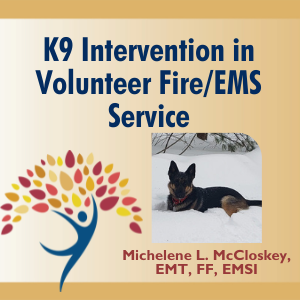
I’m a volunteer firefighter. It’s been twenty fives years but I can still see the young mans face as he lay there void of life at a motorcycle crash during my first year of service. I think that’s why it took me 25 years to figure things out. I compartmentalized everything to survive. It took years to let those barriers relax enough for my experiences to blend and realize I can help other first responders.
In the volunteer model there’s no-one there to follow up to see how providers are managing the stressors after a call. The responder goes back to empty firehouse and then home. There was nothing in place to mitigate or manage a “bad” call. The connection of seeing my dog at the door when I came home from a bad call was powerful. I didn’t understand the science, I just knew how it made me feel. Call after all and year after year I continued to receive healing comfort from the many dogs that lived with me and the ones that crossed my path.
The purpose of this presentation is to reach as many first responders and provide them with tools to mitigate or interrupt the process of PTS/PTSI.
There are four levels of intervention in this model. In level one and two the dog belongs to the handler responder and trained and certified at the therapy dog level and exposed to the components present in debriefing and various settings. Level 3 uses puppies. Most are obtained from breeders.
There are several different organizations that provide services dogs and they all have their own different ways of doing so. Some use rescue dogs, others use breeders. Each has pros and cons. The ideal breed for service is the breed with which the handler is most comfortable. Any breed is suitable for service, but the requirements for temperament are not. Temperament is critical and cannot be compromised. Again, keeping the mantra of “safety” in mind is key. If the responder/handler is afforded a safe environment (which becomes mobile with a service dog), this process becomes life changing and all possibilities are on the table.Level 1. K9 CISM
To provide peer debriefings for fire fighters, EMS personnel and police; essentially providing Critical Incident Stress Management support for first responders who have experienced trauma — in the line of duty, during active duty or after leaving service – in order to attempt to prevent the onset of PTSI using the Mitchell model of peer support.
To support various first responder agencies to create preventative support strategies to head off PTSI before it takes hold, by creating safe places to process traumaLevel 2. Therapy/”Mobile Service” (1:1 – K9 Team: Responder)
Handler uses their personal therapy dogs for those who require K9 intervention, but for some reason are not able/do not want their own dogLevel 3. PTS Service Dogs
To network with breeders and trainers in order to provide affordable service dogs to first responders, veterans and others who suffer with PTSI who are in need of PTSI Service Dogs. The canines are puppies obtained from established selected breeders and provided to handler at minimal cost.
The puppy is in handlers possession at 8 weeks, then to trainer for 1-2 week B/T for polishing and detailing4. Education
To speak to as many groups as possible to educate in PTSI prevention in high risk environments in order to be able to access what ever services are needed when the time comes.Learning Objectives:
Upon completion, participants will be able to- Know the two hormones stress reduction and production.
- Know the five levels of K9 Intervention.
- Know the difference between “PTSD” and “PTSI”.
Presenter
-

Michelene L. McCloskey, EMT, FF, EMSI, K9 Handler
EMT, FF, EMSI, K9 Handler
K9 PTS Intervention
With over 20 years of service as a Fire Fighter/Emergency Medical Technician, 20 as a CISM provider and 14 as an Emergency Medical Services Instructor, Michelene became the Coordinator of the Animal Response Team in her home town of Chester County, PA after hurricane Katrina. In 2015 she became the event manager for a local Search dog team and has since founded K9 PTS Intervention, an organization providing interventions in many different models to responders traumatized in the line of duty or during active duty.
Handouts
-
Overview
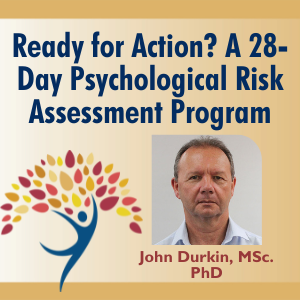
Health and safety legislation exists to protect the mental health of workers, including those at high risk of psychological injury, by separating the responsibilities between the worker (for self and others) and the manager (for the work environment). However, the traditional clinical viewpoint seems to ignore this in favour or seeing all psychological injuries as phenomena in need of medical, psychiatric or psychological expertise once symptoms have emerged and persisted. For example, symptoms of posttraumatic stress disorder (PTSD) have to await the passage of 28 days before diagnosis and treatment, while health and safety law demands immediate action. As crisis intervention is designed for immediate action and clinical guidance requires a delay, crisis intervention appears to be in keeping with legislation created to secure mental health. The tension that exists between the clinician’s advice to ‘watch and wait’ and the peer’s compulsion to ‘act now’ might be resolved by a psychological risk assessment undertaken in the immediate 28 day post-incident period.
Risk assessment for any health condition has three steps: 1. Identify the hazard, 2. Intervene to minimise or eliminate the hazard, and, 3. Monitor to ensure the intervention has worked. An online portal that measures depression, anxiety and PTSD and reports results to the completer themselves has several advantages. First, the assessments can be the same as those likely to used by the clinician should symptoms persist and recovery does not occur. Second, the completer is now aware of their likely condition and the level of risk exhibited by the scores. Third, the organisation can be informed of the overall levels of mental health by demographic variables including team, department and location. With information shown to the worker and statistical patterns shown to the manager both carry their own legal responsibility to act to ‘minimise or eliminate’ the hazard represented by high scores on clinical assessments.
Taking the discrepancy that exists between the clinical viewpoint and the crisis intervention viewpoint a secure online portal has been designed to meet the health and safety demand for risk assessment by informing the worker themeslves (with contact details for support and guidance), informing the organisation’s managers of ‘hot-spots’ of mental health hazards in the workplace and putting both ‘on notice’ that they should now act. The ‘I didn’t know’ claim to justify inaction would become invalid for both parties. This presentation will show how the backdrop of health and safety legislation justifies the use of crisis intervention following critical incidents. It also offers a means by which workers can self-assess and decide how they will tackle the risk they have been informed of, In addition this will allow managers to shape the workplaces structure and policies in light of the patterns emerging from the de-identified data generated by the workers collectively. The potential to use the data generated to underpin mental health policy, identify training needs and show the effectiveness of crisis intervention will be discussed.
Learning Objectives:
Upon completion, participants will be able to:- Recognise key indicators that return to duty is safe following a critical incident
- Assess risks to mental health in compliance with workplace safety and health legal demands
- Complete assessment, intervention and return-to-duty within 28 days of a critical incident
Presenter
-
John Durkin, MSc. PhD
STAGE-28 International
John Durkin Ph.D sits on the Boards of the International Critical Incident Stress Foundation (ICISF), Crisis Intervention Management, Australasia (CIMA) and is co-director of STAGE-28 International offering training, research and consultancy in crisis intervention and psychological risk assessment. His interest in posttraumatic growth took hold in his early career as a firefighter and was later strengthened by his role in the post-9/11 support effort at New York’s fire and police departments. Convinced that critical incident stress management (CISM) delivered by peers had the potential to prevent a number of mental disorders he sought enhancements that might challenge clinical therapies for effectiveness. Further qualifications and training persuaded Dr Durkin that peers delivering crisis intervention in a person-centered fashion would prove superior to standard treatments for PTSD and facilitate posttraumatic growth. A number of pilot projects have supported this and led to training a team of firefighters in CISM, informed by person-centered theory. When Dr Durkin was called to lead the crisis response for the Metropolitan Police Service following London’s 2017 terrorist attacks and Grenfell Tower fire, the same team of firefighters came in support. Over 80 police officers were seen and no report of PTSD or depression had been received three years later. Growth in police officers and firefighters has been widely reported and awaits empirical confirmation in future projects. The legal demands of occupational safety and health were met during this period leading to the design of a psychological risk assessment for use in the emergency, medical and military services.
Handouts
-
Overview
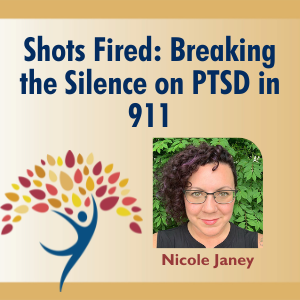
The purpose of this presentation is to shed light and start the conversation of addressing PTSD in the 911 telecommunications profession. In 2015 I was working as a police dispatcher for Boston police, and successfully managed an officer involved shooting. While I received many awards for how I managed the situation, the fallout of PTSD and lack of support had me making the difficult decision to leave 911 altogether in order to address my mental health. During my journey of healing, I came to the realization that the 911 field was my passion, and that dispatchers everywhere are lacking the support needed in order to continue in the field. I’ve now been back in the filed for 4 years. In addition to sharing my story, I’ve applied my experience to working on NENA’s Wellness Committee, specifically the Peer Support sub-committee, and the Acute Stress working group. Locally, I attended the Group and Individual Counseling Training, and applied to be a part of the local CISM team, which recognizes the important of including 911 personnel for defusing and debriefings. I am currently the point of contact for my agency. Recently, myself and other 911 professionals on the team have been meeting to discuss the 10 top calls for dispatchers, as well as discuss how we can spread the word that CISM teams in our area is a resource available to all dispatchers. In addition to walking viewers through my story – the initial call, the PTSD fallout, and the steps I took to change my mindset and heal – I want to be able to present the dispatcher’s point of view in handling critical incidents, and how agencies can help stop burnout and high turnover by providing resources to their dispatchers.
Learning Objectives:
Upon completion, participants will be able to:- Identify problems 911 professionals face on the job
- Understand how they can contribute to changing the conversation about PTSD in first responders
- Identify obstacles 911 personnel face utilizing a CISM team
Presenter
-

Nicole Janey
Emergency Communications Supervisor
Chelsea Emergency Management
Nicole has been working in the 911 field for 15 years. Highlights of her career include working the Boston Marathon Bombing and the ensuing week, as well as successfully managing an officer down call. Following that event, she took a break from 911 in order to address the PTSD. She returned to 911 with a passion for all things related to 911 mental health and wellness, and is particularly focused on spreading the word about the effects of PTSD in the 911 community, and the need for better support and services for our personnel. She is also involved in the Greater Boston Law Enforcement CISM team, and the National Emergency Number Association. She is active in several subcommittees within NENA's wellness continuum. As a side project, she is currently curating “You Are Not Alone: Portraits of the Gold Line Family” , a photography project that seeks to put a face to all members of the 911 profession, and showcase how everyone is effected by the job, regardless of role.
-
Overview
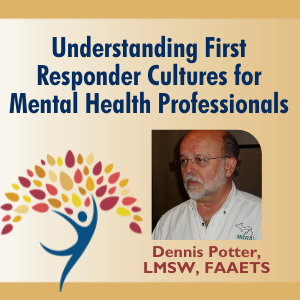
By taking the ICISF Assisting Individuals in Crisis and Group Crisis Intervention courses, we, as mental health professionals, have learned how to provide assistance to First Responders after a Critical Incident. But what if they seek our help with none crisis issues, do we treat them the same as we would any civilian who comes to us for help? The answer is a resounding NO! As with any special group, we must take into consideration the “cultural issues” of the group and adjust our clinical interventions to acknowledge their difference. This seminar is a quick look at some of the specifics of first responders and the cultures of their profession and some ideas on adapting our clinical interventions to meet their needs.
Learning Objectives:
Upon completion, participants will be able to:- Identify 3 key aspects of a first responder culture
- Identify 2 unique stressors in each first responder culture
- Identify 2 adaptations they might make in their clinical approach to working with first responders in their practice setting
Presenter
-
Dennis Potter, LMSW, FAAETS
CEO
Kantu Consultants
Dennis Potter is a licensed social worker who helped to form one of the first community based Crisis Response Teams in Michigan in 1986 and the Michigan Crisis Response Association. Dennis is the CEO of Kantu Consultants. He is an Approved Instructor for all of the ICISF Core Courses, and is a member of the ICISF Faculty since 2006.
Dennis has been a presenter at the last 14 International Critical Incident Stress Foundation World Congresses. Dennis was awarded the ICISF Excellence in Training and Education Award at the 2011 World Congress. Dennis was given the Grand Rapids Police Department Exceptional Civilian Service Award for his 22 years of working with their Peer-to-Peer program.
Handouts
-
Overview
Communities are demanding police change how they respond to incidents, which someone is in crisis or with mental health and/or social issue concerns. Traditionally, police have responded with a law & order approach, which at times is hurtful to those in need of help. This approach may further escalate someone in crisis, which is not helpful, but further hurts the person in their time of need. Even worse is when officers use physical force when de-escalation would have been far more appropriate.
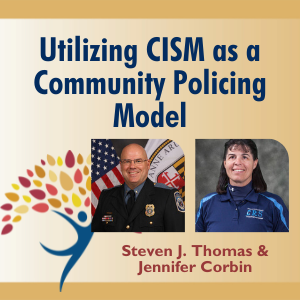
Jen Corbin and Lieutenant Steven Thomas will discuss how the SAFER-R model and CISM can be utilized to assist the community in their time of need. Law enforcement routinely responds to traumatic incidents and they will discuss how CISM interventions can be used to help families and the community. Further they will discuss how the SAFER-R model can be adapted to assist citizens whether it be: for children living in traumatic living conditions, someone looking for recovery from substance abuse, someone facing re-entry into the community from incarceration or to assist someone making threats.
Learning Objectives:
Upon completion, participants will be able to- Describe how the SAFER-R model can be modified for various community policing interventions.
- List situations which the SAFER-R can be utilized in community policing.
- Describe a “trauma responsive mindset”
Presenters
-
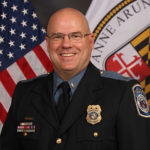
Steven J. Thomas
Lieutenant
Anne Arundel County Police
Lt. Steven Thomas, CCISM has a BA from UMBC and a MA from the University of Baltimore. He started as a patrolman with the Anne Arundel County Police in 1996 where he remained in patrol until he became the CIT and Peer Support Coordinator in 2016. In 2020 the Anne Arundel County CIT Unit was named International CIT Unit of the Year.
He is the Anne Arundel County CISM Team Coordinator. Further, he is an ICISF approved instructor and in the spring of 2019 received the ICISF Pioneering Spirt Award.
He is a Youth & Adult Mental Health First Aid Instructor and in 2018 he was named a top 100 instructor. -
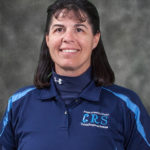
Jennifer Corbin
Director
Anne Arundel County Crisis Response
Jennifer Corbin, LMSW is Director of the Anne Arundel County Crisis Response System. Much of her work is in collaborating with outside agencies to work with the crisis system such as A. A. County Police and Fire, Health Dept., Public Schools, local hospitals, and local providers. She is a trained instructor in Mental Health First Aid (MHFA). Ms. Corbin is also trained in Critical Incident Stress Management (CISM) and helped develop a peer support team for A.A. County Police. Ms. Corbin received her master’s degree in Social Work from The UMD School of Social Work.
Handouts